
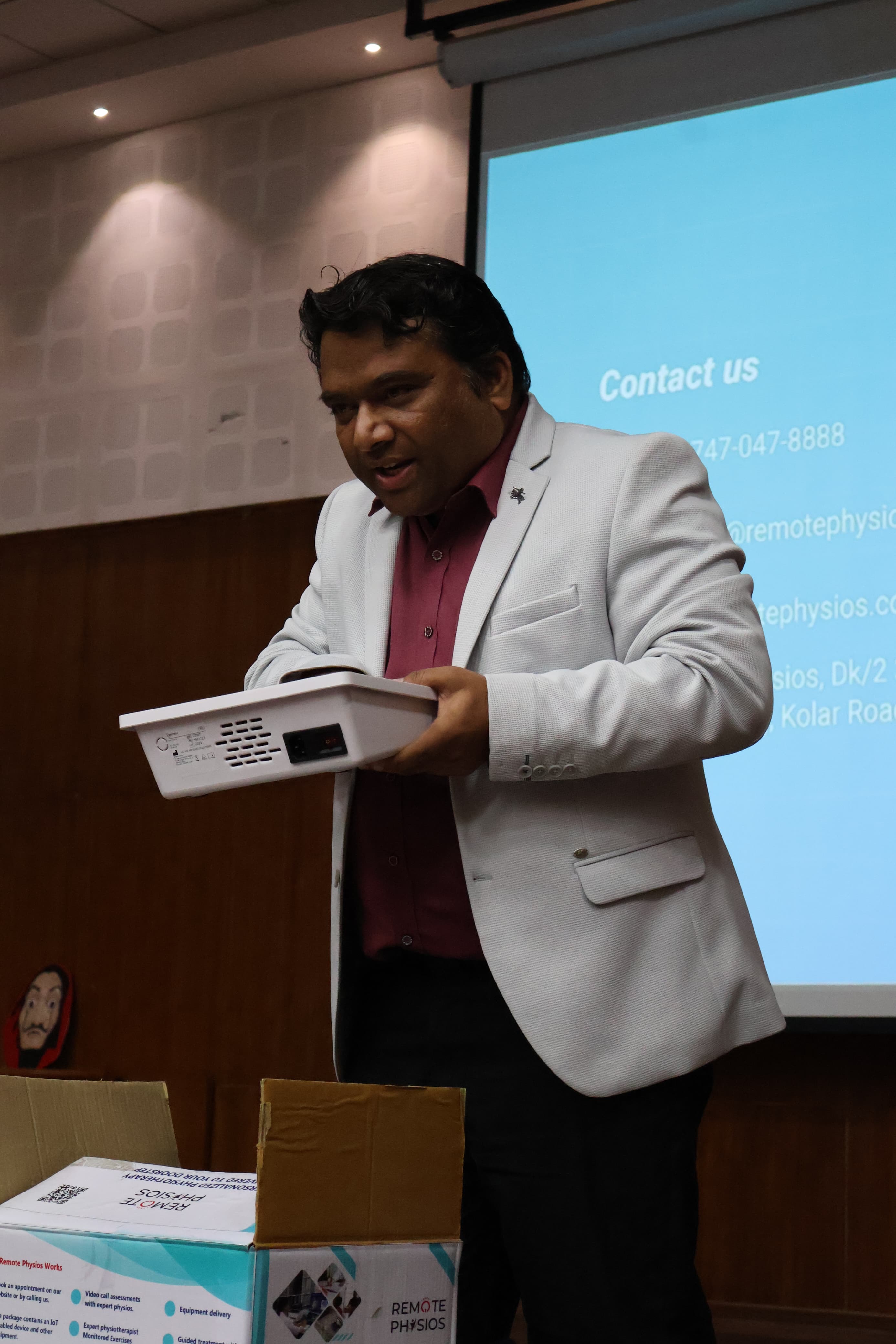
Presenting an idea at its earliest stage is often one of the most difficult parts of building innovation.
When Remote Physios began showcasing its early concepts, prototypes, and connected rehabilitation vision, the systems were still evolving. Devices were imperfect. Demonstrations were limited. Many ideas seemed too ambitious for the stage they were in. And naturally, criticism appeared much faster than support.
Some questioned the practicality.
Some questioned scalability.
Some questioned whether rehabilitation technology could truly work remotely.
Others saw only the gaps that still needed improvement.
But this phase became one of the most important learning experiences in the journey.
Early-stage innovation rarely looks polished. Before solutions become refined, they often appear incomplete, unconventional, or difficult to understand. The challenge is not only technical development — it is continuing to believe in the vision while improving it through every criticism, rejection, and difficult conversation.
Over time, the team at Remote Physios realized that resistance is not always a barrier. Sometimes it is part of the process that strengthens clarity, resilience, and execution.
Every major idea passes through a stage where it receives more questions than encouragement.
Crossing that phase requires patience, persistence, and the willingness to keep building even when support is limited.
Because innovation is not validated on the first presentation.
It is validated through continuous effort, improvement, and belief over time.