
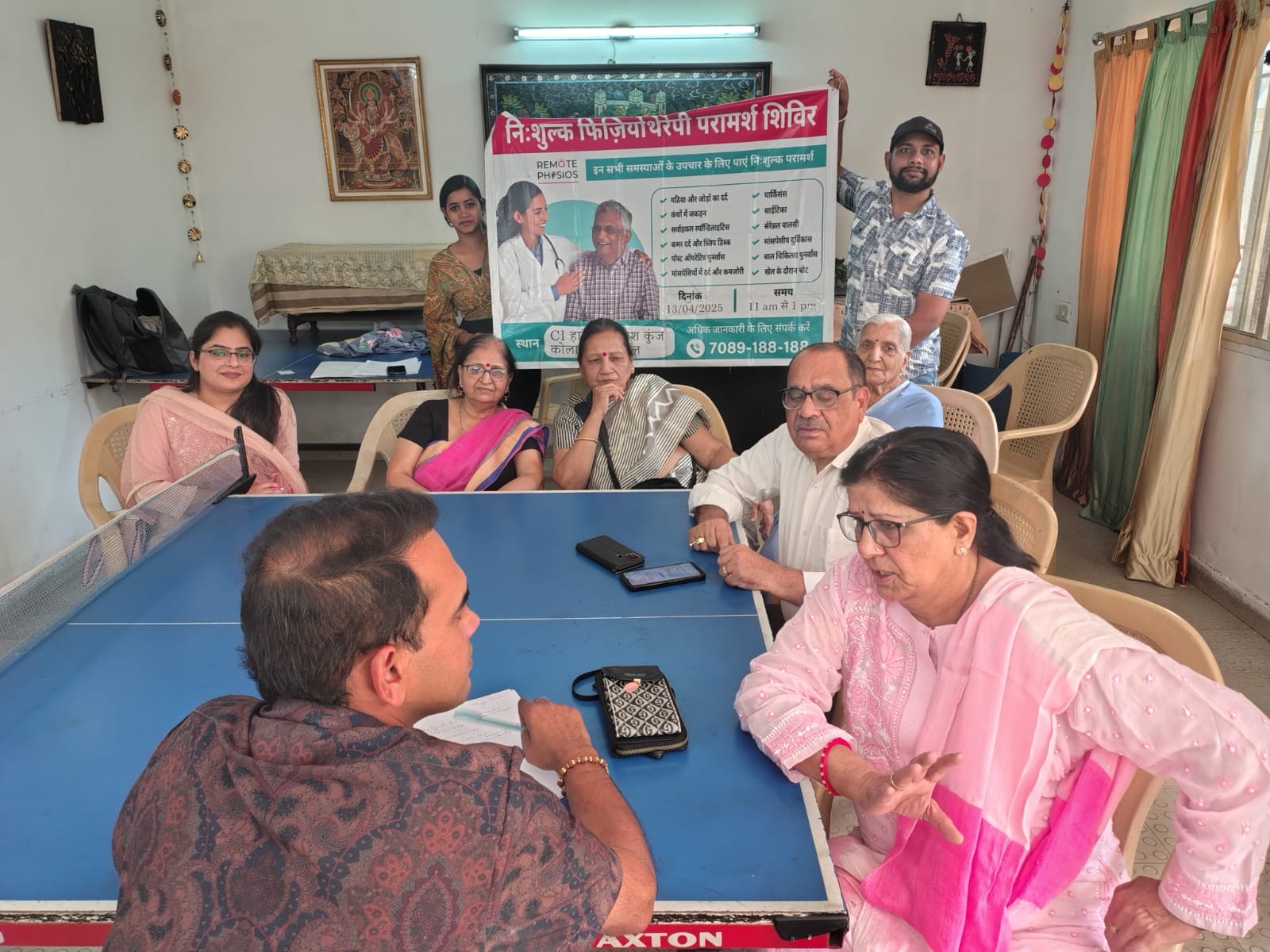
Before building scalable rehabilitation technology, Remote Physios spent time where the real challenges existed — within communities, camps, awareness programs, patient interactions, and field surveys.
The journey was not only about creating devices or software. It was about understanding people.
Community rehabilitation camps and surveys became one of the most important learning phases in the evolution of Remote Physios. Every interaction revealed a different layer of the rehabilitation gap. Patients struggled with accessibility, continuity of exercises, delayed interventions, lack of awareness, poor follow-up systems, and limited access to trained professionals. Many individuals discontinued rehabilitation not because they recovered, but because systems around them failed to support continuity.
The field observations also highlighted another critical reality — physiotherapists themselves needed better tools, structured monitoring systems, and scalable rehabilitation support mechanisms.
The team realized that effective rehabilitation could never be built only inside laboratories or offices. It had to be understood from homes, rural settings, workplaces, community centers, and from the daily lives of people managing pain, disability, neurological conditions, and movement limitations.
Surveys and camps became more than outreach activities. They became a research foundation.
Every conversation contributed to shaping the vision of Remote Physios — a future where rehabilitation becomes connected, trackable, accessible, and sustainable beyond physical clinic walls.
Technology alone does not solve healthcare problems.
Understanding people does.